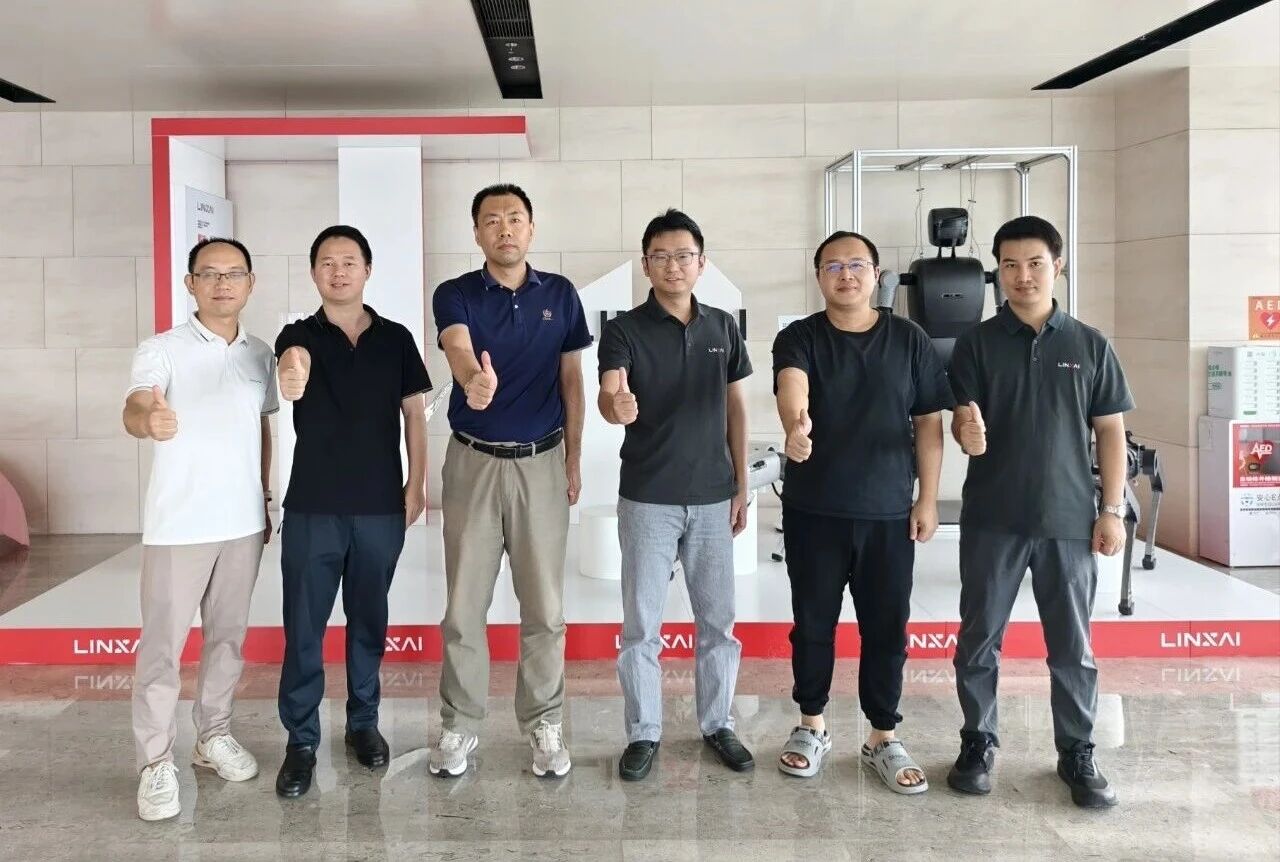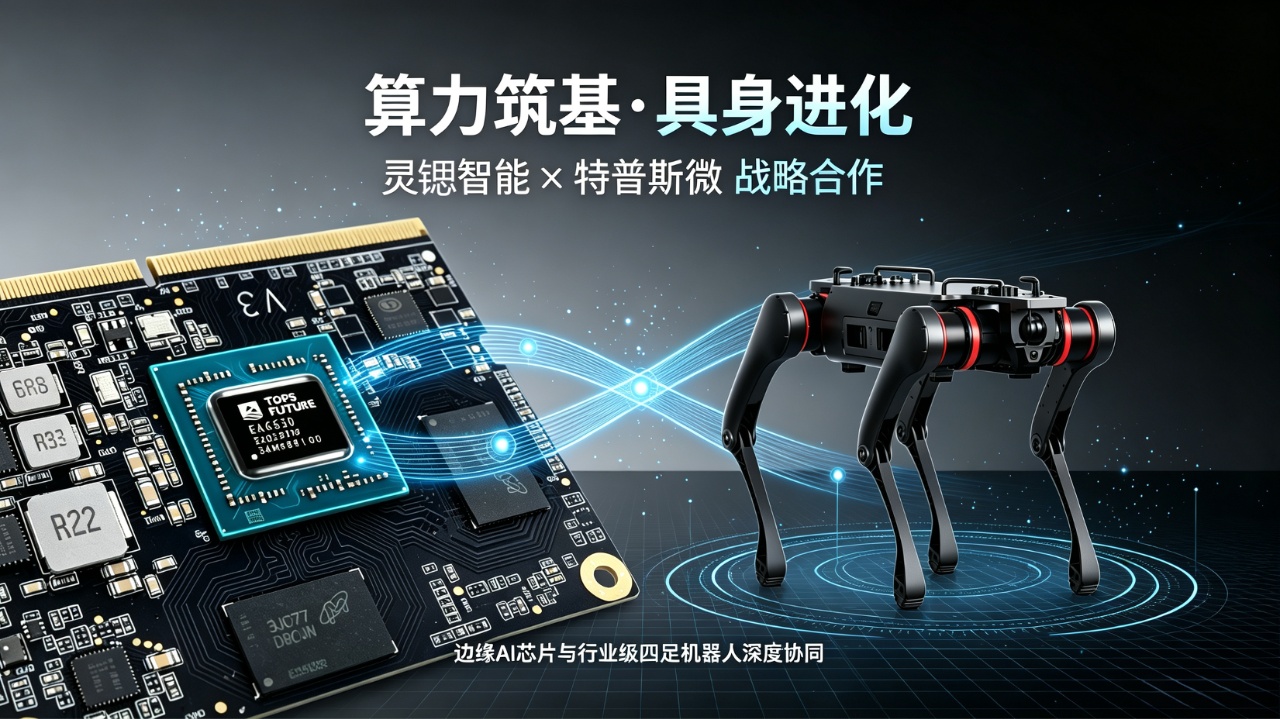
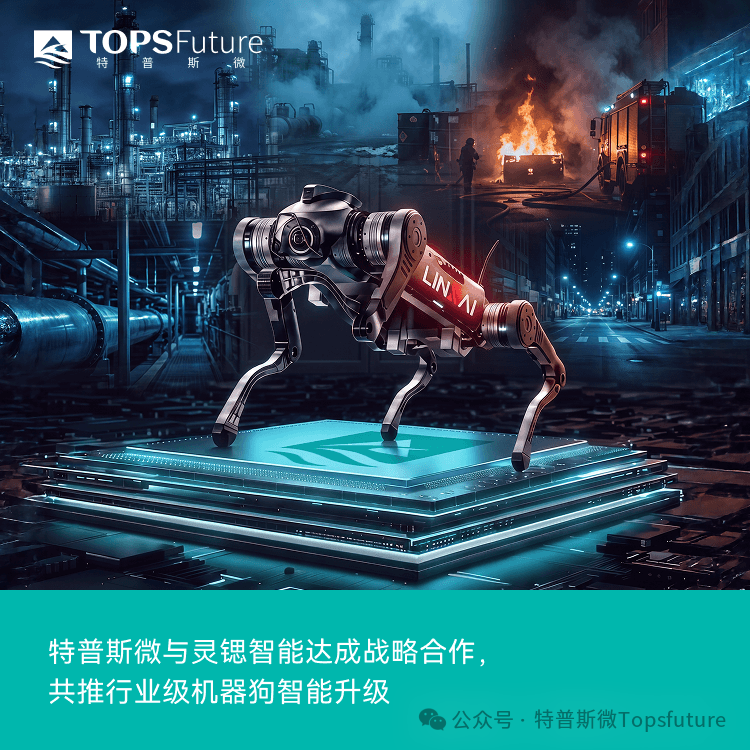
LINXAI Robotics and Shanghai-based TOPSFUTURE have entered into a strategic partnership. The companies will collaborate on custom chip development and the close integration of edge AI system-on-chip (AISoC) technology with industrial quadruped robot platforms. Their work will cover on-device inference, environmental perception, navigation and obstacle avoidance, coordinated tasks and industry applications, advancing quadruped robots from capable movers to more intelligent systems.
The partnership will accelerate the integration of edge AI computing with embodied intelligence. It aims to evolve highly mobile, high-payload and reliable quadruped platforms into a new generation of intelligent industrial systems with real-time perception, on-device inference, autonomous decision-making and coordinated operation.
LINXAI’s quadruped robots are already deployed in industrial inspection, security patrols, hazardous materials handling, firefighting and emergency response, pipeline inspection and public safety. The company provides standard and customized industrial quadruped robots and supporting solutions to customers in energy, power, firefighting, security, specialized industries and universities.
TOPSFUTURE: A Platform for Edge AISoC Computing
As urban infrastructure, industrial parks and energy facilities continue to develop, conventional manual inspection faces growing challenges. Underground utility tunnels are often narrow, complex and enclosed, with standing water, unpleasant odors, harmful gases and limited communications. Large industrial parks face extensive patrol areas, demanding night shifts and strict emergency response requirements. In environments involving frequent, repetitive or dangerous work, or places people cannot safely access for extended periods, quadruped robots with flexible mobility and support for multiple payloads are becoming an important enabler of unmanned operations.
A key advantage of quadruped robots is their ability to adapt to complex terrain and unstructured environments. Unlike conventional wheeled equipment that depends on suitable road surfaces, quadruped robots can move steadily over steps, slopes, walkways, gravel and slippery ground. This makes them well suited to utility tunnels, factory passages, equipment platforms and industrial park roads. With payloads such as dual-spectrum pan-tilt cameras, gas detection modules, acoustic sensing equipment and lidar, the robots can capture images, monitor conditions, identify anomalies, transmit data remotely and issue intelligent alerts, providing a more continuous, reliable and safe means of collecting data.
TOPSFUTURE: A Platform for Edge AISoC Computing
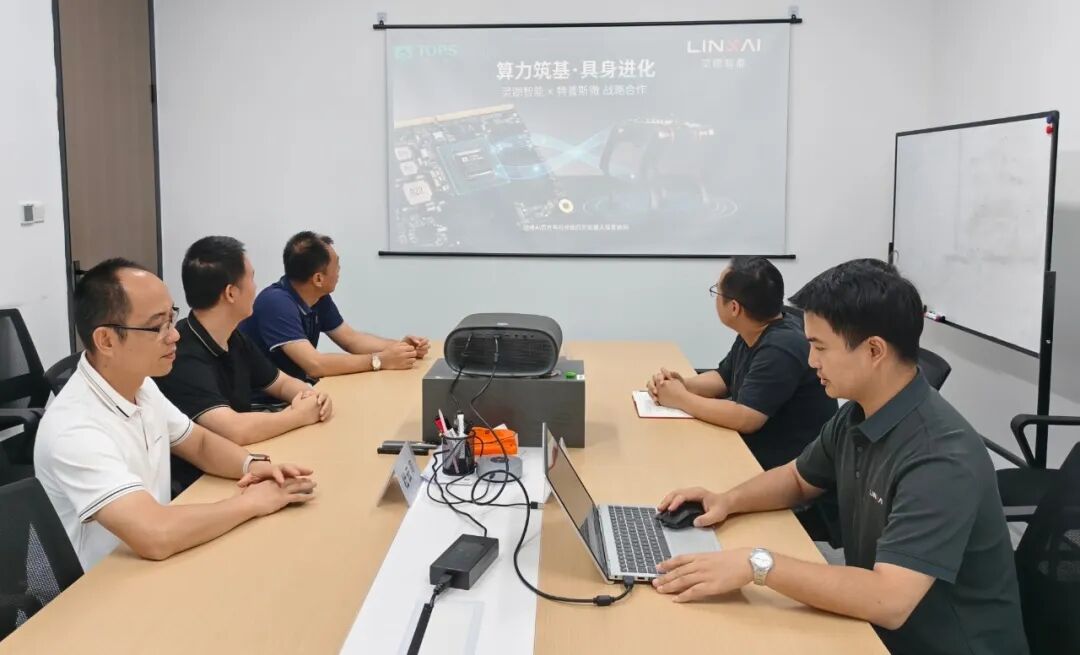
Headquartered in Shanghai, with branches in Shenzhen and Singapore, TOPSFUTURE aims to become a leader in edge computing chips. The company develops AI chips, focusing on high computing performance, energy efficiency and platform-based edge AISoCs to provide a stable, scalable computing foundation for diverse intelligent devices and industry applications.
For quadruped robots and embodied intelligence devices, real-time on-device computing is becoming a fundamental requirement for greater intelligence. When operating in complex environments, robots must simultaneously process multimodal data for vision, lidar, inertial navigation, voice interaction, object recognition, path planning and anomaly detection. These workloads place greater demands on chip performance, power consumption, real-time responsiveness and stability.
Drawing on its expertise in high-performance semiconductor design, edge computing, low-power chip architectures and AI inference acceleration, TOPSFUTURE will provide on-device computing support for LINXAI’s quadruped robots. This will strengthen perception, reasoning and autonomous decision-making in complex industrial environments, hazardous operations and intelligent inspection tasks.
LINXAI: Expertise in Industrial Quadruped Robots and Embodied Intelligence
LINXAI is a technology company focused on the development, manufacture and deployment of industrial quadruped robots and embodied intelligence products. Its mission is to use highly reliable robotic platforms to free people from strenuous, dangerous and high-risk work.
Built around real-world industry needs, LINXAI’s product portfolio includes heavy-payload, medium-payload, wheeled-legged and last-mile delivery quadruped robots. Its capabilities span robot hardware, motion control, perception and navigation, and engineering delivery. The heavy-payload series is designed for demanding environments involving heavy equipment transport, wide-area exploration and emergency rescue. Its medium-payload and wheeled-legged series serve factory inspection, field exploration and unstructured terrain such as stairs, slippery surfaces and rock piles, combining mobility with operational stability.
LINXAI has deployed its robots in industrial inspection, security patrols, hazardous materials handling, firefighting and emergency response, pipeline inspection and public safety. It provides industrial intelligent robots and solutions to customers in energy, power, firefighting, security, specialized industries and universities.
From Quadruped Robots to Intelligent Industrial Systems: Three Areas of Collaboration
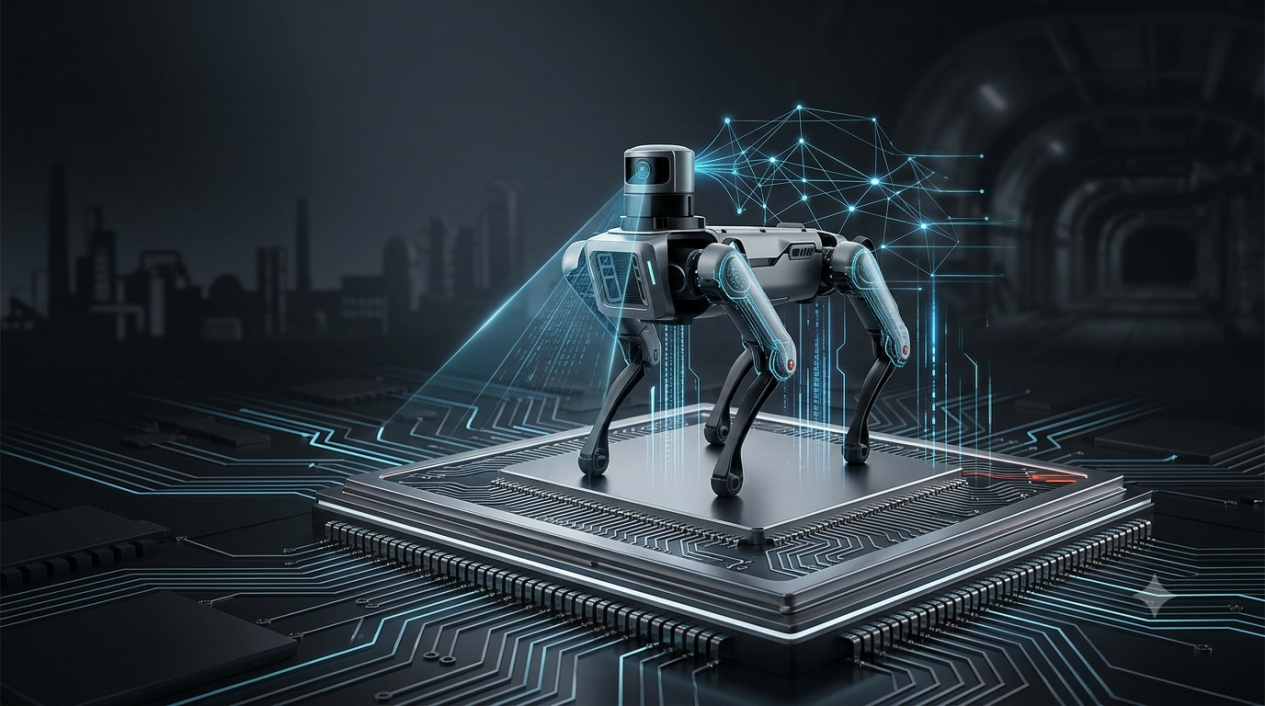
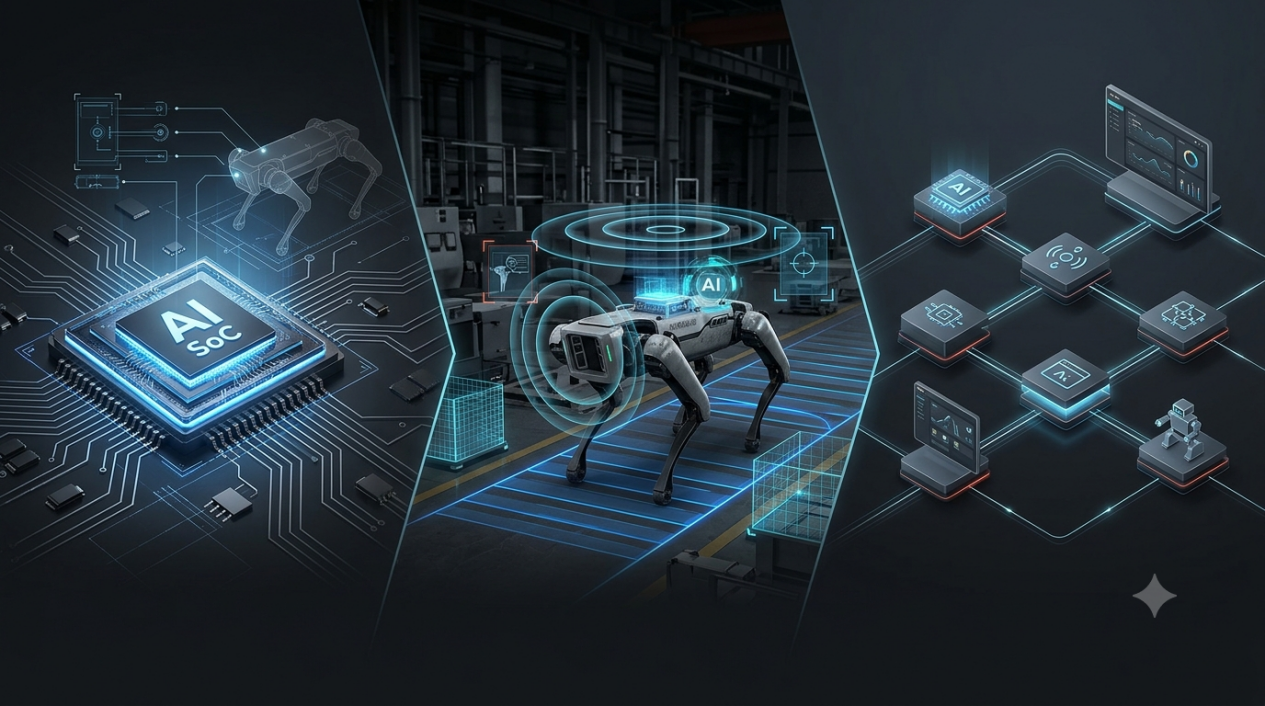
The partnership will focus on advancing quadruped robot intelligence and deployment across industries, with three priorities: custom chip development, stronger on-device intelligence, and coordinated hardware and software integration.
Custom Chip Development: Computing Solutions Tailored to Industrial Quadruped Robots
Based on LINXAI’s requirements for computing performance, power consumption, interfaces, reliability and environmental adaptability in complex industrial settings, the companies will explore jointly defining and developing custom chips for industrial quadruped platforms. They will optimize edge AI SoCs for sensor connectivity, multimodal data processing, on-device inference and task coordination, providing a computing foundation more closely suited to future robot development.
On-Device Intelligence: Stronger Real-Time Perception and Inference
The companies will closely integrate TOPSFUTURE’s edge AI SoCs with LINXAI’s quadruped robot platforms. They will optimize visual recognition, object detection, environmental perception, behavior analysis, voice interaction and task scheduling. Enabling more real-time AI workloads to run on the robot will improve responsiveness, stability and autonomous operation in complex scenarios.
Integrated Hardware and Software: An Open, Extensible Robotics Ecosystem
To support continued product development, the companies will collaborate on chip integration, algorithm porting, model optimization, perception module integration, application development, remote management and customized solutions. This will improve product openness, extensibility and deployment efficiency, helping industrial inspection, site security, public safety and emergency rescue applications progress from individual deployments to scalable platforms.
Building an Embodied Intelligence Ecosystem for the Next Stage of Quadruped Robotics
LINXAI will continue to draw on its strengths in quadruped robot hardware, motion control algorithms, industrial reliability, mobility in complex environments and engineering delivery to expand real-world applications. Together with TOPSFUTURE, it will combine these capabilities with expertise in edge AI chips, low-power computing architectures and platform-based SoCs, giving its robots a stable, efficient and scalable foundation for on-device intelligence.
As industries adopt more intelligent systems, LINXAI and TOPSFUTURE will continue integrating edge AI computing with embodied robotics. Their collaboration aims to move industrial quadruped robots beyond walking, carrying payloads and inspecting toward stronger perception, computation, judgment and coordination, supporting industrial intelligence, public safety, emergency rescue and digital transformation.