
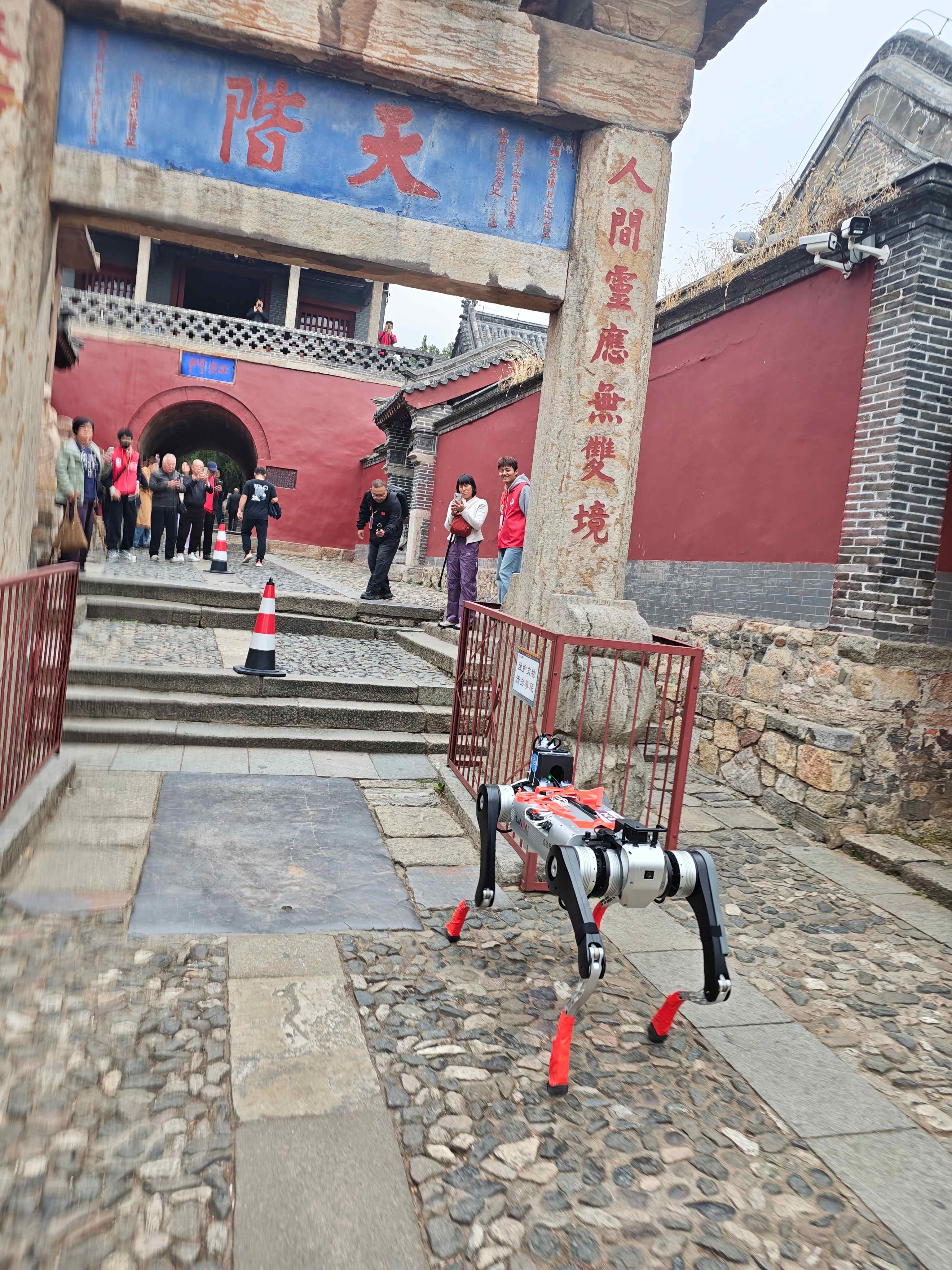
LINXAI Robotics has achieved outstanding results at the inaugural CMG World Robot Mount Tai Climbing Competition, held on November 2, 2026. Competing in both the legged-robot load-bearing and speed events, LINXAI secured first and third place in the load-bearing challenge and third place in the speed challenge.

More importantly, all LINXAI competition entries completed their challenges through fully autonomous navigation, without remote control.
The results demonstrate the capabilities of LINXAI's heavy-duty quadruped robots in autonomous mobility, high-load transportation, dynamic balance, and high-speed locomotion across challenging natural terrain.
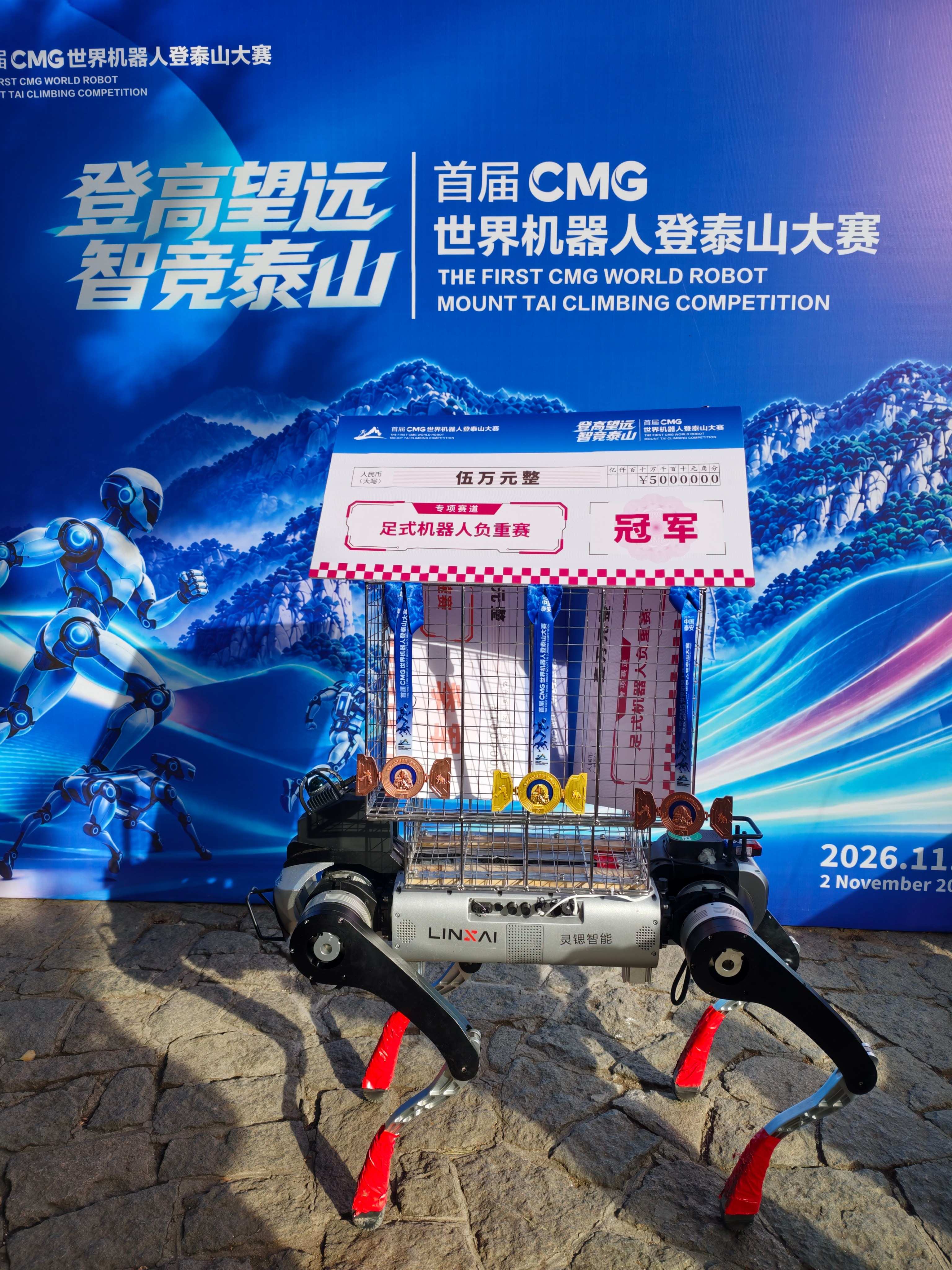
Mount Tai: A Demanding Real-World Test for Quadruped Robots
Known for its dramatic mountain landscape and extensive stone stairways, Mount Tai provided a particularly demanding environment for the competition.
Unlike flat indoor testing facilities or controlled outdoor tracks, the mountain presented robots with steep inclines, continuous stair climbing, uneven stone surfaces, elevation changes, and complex terrain transitions.
These conditions place considerable demands on quadruped locomotion systems. Maintaining stability while navigating steep slopes and irregular surfaces requires precise motion control, coordinated joint movement, adaptive gait planning, and real-time balance adjustments.
The challenges become even greater when robots carry substantial payloads. Additional weight changes the robot's center of gravity, increases the demands on its joints and drive system, and makes maintaining dynamic stability significantly more difficult.
For LINXAI, Mount Tai offered an opportunity to validate its technology under demanding real-world conditions rather than relying solely on laboratory performance.
First and Third Place in the Load-Bearing Challenge
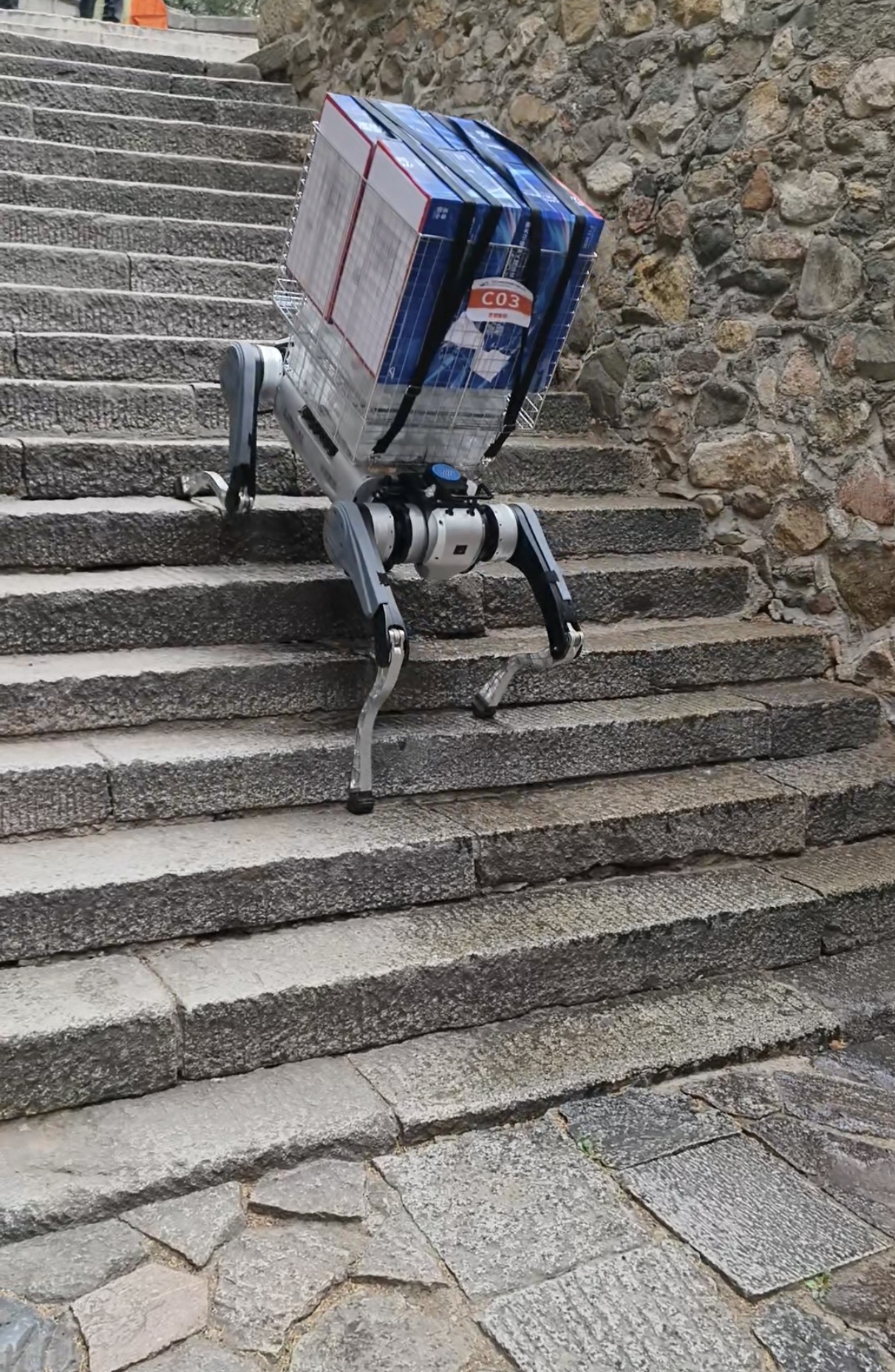
LINXAI delivered an exceptional performance in the legged-robot load-bearing competition, securing both the championship and third place.
The competition consisted of four stages designed to simulate practical mountain transportation scenarios. Robots were required to carry supplies along challenging mountain routes, testing their payload capacity, climbing ability, and stability throughout the course.
One particularly demanding stage involved a combined weight of 70 kg for the supplies and carrying basket — substantially exceeding the robot's rated payload capacity of 50 kg.
According to Peng Shaowu, Product Director at LINXAI Robotics, this stage represented one of the toughest challenges of the competition.
The robot's long-leg design played an important role in its performance. Its ability to climb two steps at a time provided an advantage when negotiating Mount Tai's extensive stairways and overcoming significant terrain obstacles.
Meanwhile, LINXAI's motion-control algorithms had been optimized to address the specific challenges of mountain climbing under heavy loads, particularly when carrying stacked cargo that raises the robot's center of gravity.
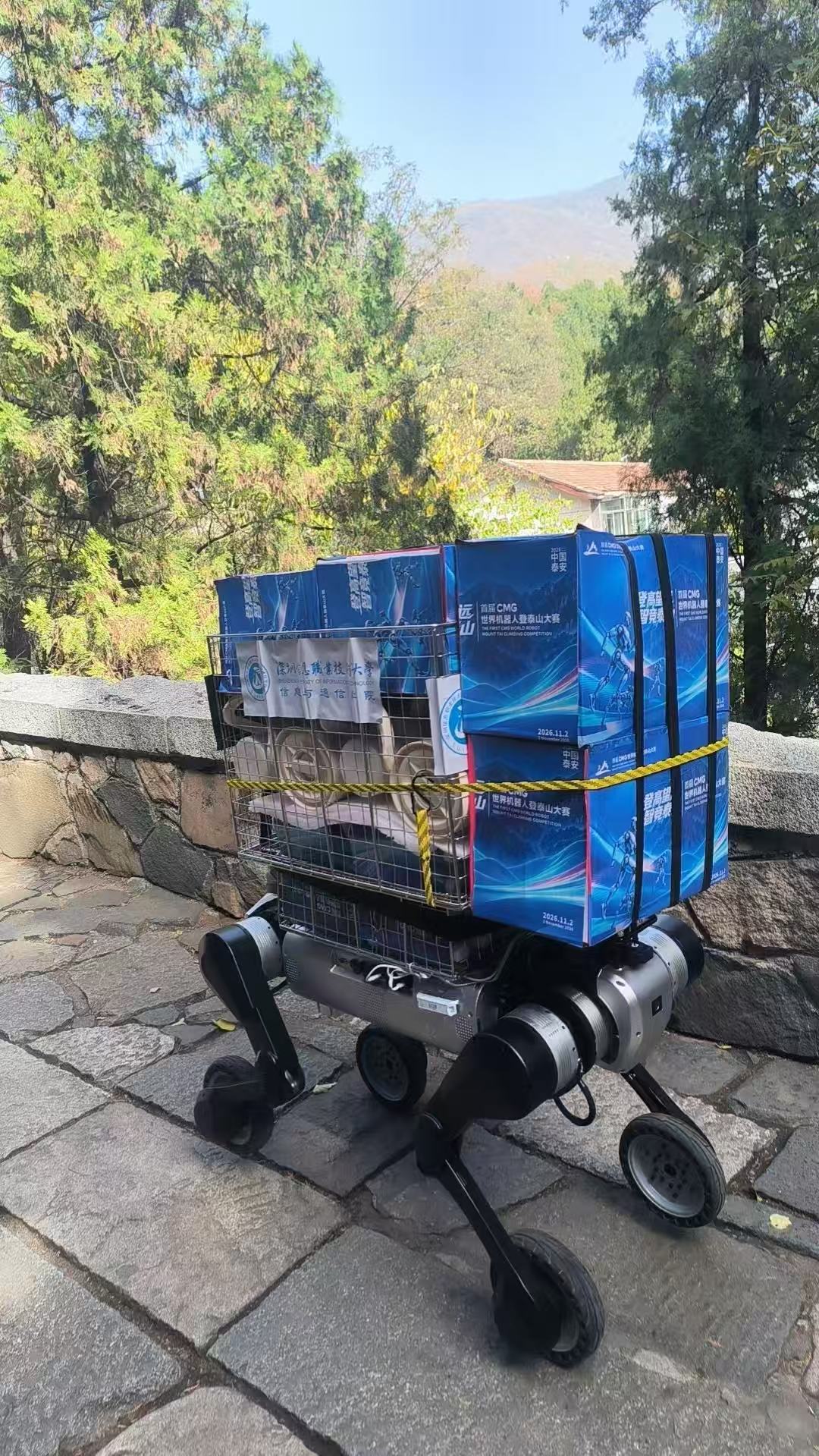
Another notable achievement came from LINXAI's wheeled-legged quadruped, which secured third place in the load-bearing event. It was the only wheeled quadruped robot among the award-winning entries, demonstrating the potential of wheeled-legged mobility for demanding outdoor transportation applications.
Third Place in the Speed Challenge: Heavy-Duty Does Not Mean Slow
LINXAI's capabilities extend well beyond high-load transportation.
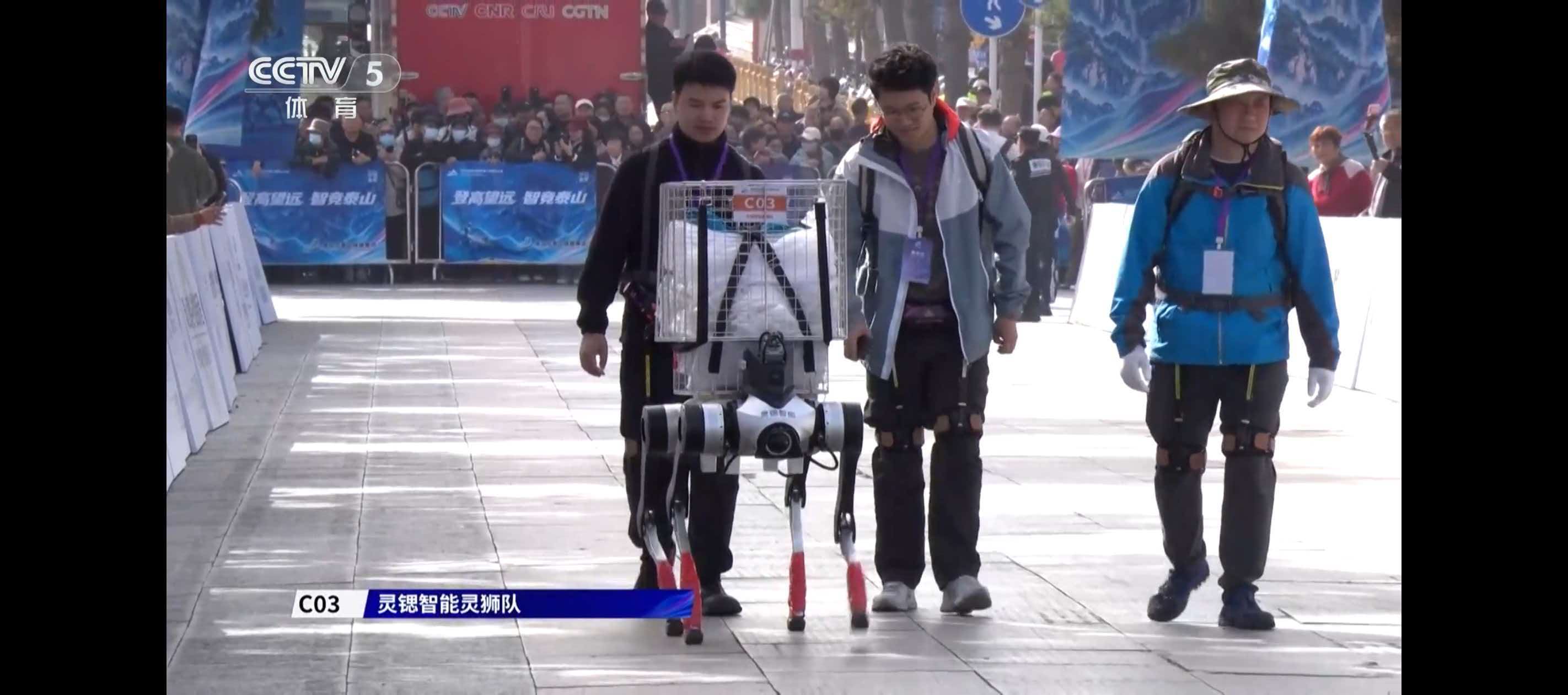
In the legged-robot speed competition, LINXAI secured third place against numerous competitors featuring smaller, lighter, and highly agile quadruped platforms.
For a large heavy-duty quadruped, achieving a top-three finish in a speed-focused event is a significant accomplishment.
The result highlights the effectiveness of LINXAI's locomotion and motion-control systems, demonstrating that a robot designed for demanding payload requirements can also deliver competitive speed, dynamic stability, and agile movement.
Together, the load-bearing and speed results challenge the conventional perception that heavy-duty quadruped robots must compromise mobility for payload capacity.
LINXAI's performance demonstrates a more balanced approach to quadruped robotics, combining load-bearing strength, mobility, and autonomous operation in a single platform.
LINXAI and Unitree Occupy All Podium Positions in Both Events
The competition also highlighted the strong performance of China's leading legged-robot developers.
Across the two legged-robot events — load-bearing and speed — LINXAI Robotics and Unitree Robotics occupied all three podium positions in each competition.
Each company achieved one first-place finish and two additional podium finishes, reflecting their strong technical capabilities and competitive performance in the field.
From Competition to Real-World Autonomous Operations
For LINXAI, the Mount Tai competition was not simply about winning medals. It was also an opportunity to collect valuable operational data in a complex, unstructured outdoor environment.
The fully autonomous challenges provided insights into the performance of the robots' navigation algorithms, locomotion systems, and chassis under varying terrain conditions and demanding payload requirements.
These findings will support further improvements in autonomous navigation, motion-control algorithms, and overall chassis performance.
The technologies validated in this competition are highly relevant to real-world applications, including:
- Industrial Inspection: Autonomous patrols across complex industrial sites, energy facilities, and infrastructure.
- Heavy-Duty Transportation: Moving tools, equipment, and supplies across challenging outdoor terrain.
- Emergency Response: Accessing hazardous or difficult-to-reach areas where conventional equipment may struggle.
- Outdoor Operations: Supporting demanding field missions across mountainous, uneven, and unstructured environments.
At LINXAI Robotics, we are committed to developing quadruped robots that go beyond basic mobility to deliver practical, reliable performance in demanding working environments.
The Mount Tai competition marks another important milestone in our journey toward more capable, autonomous, and versatile quadruped robotics.
LINXAI Robotics — Built for the toughest terrain. Ready for real-world missions.
About LINXAI Robotics
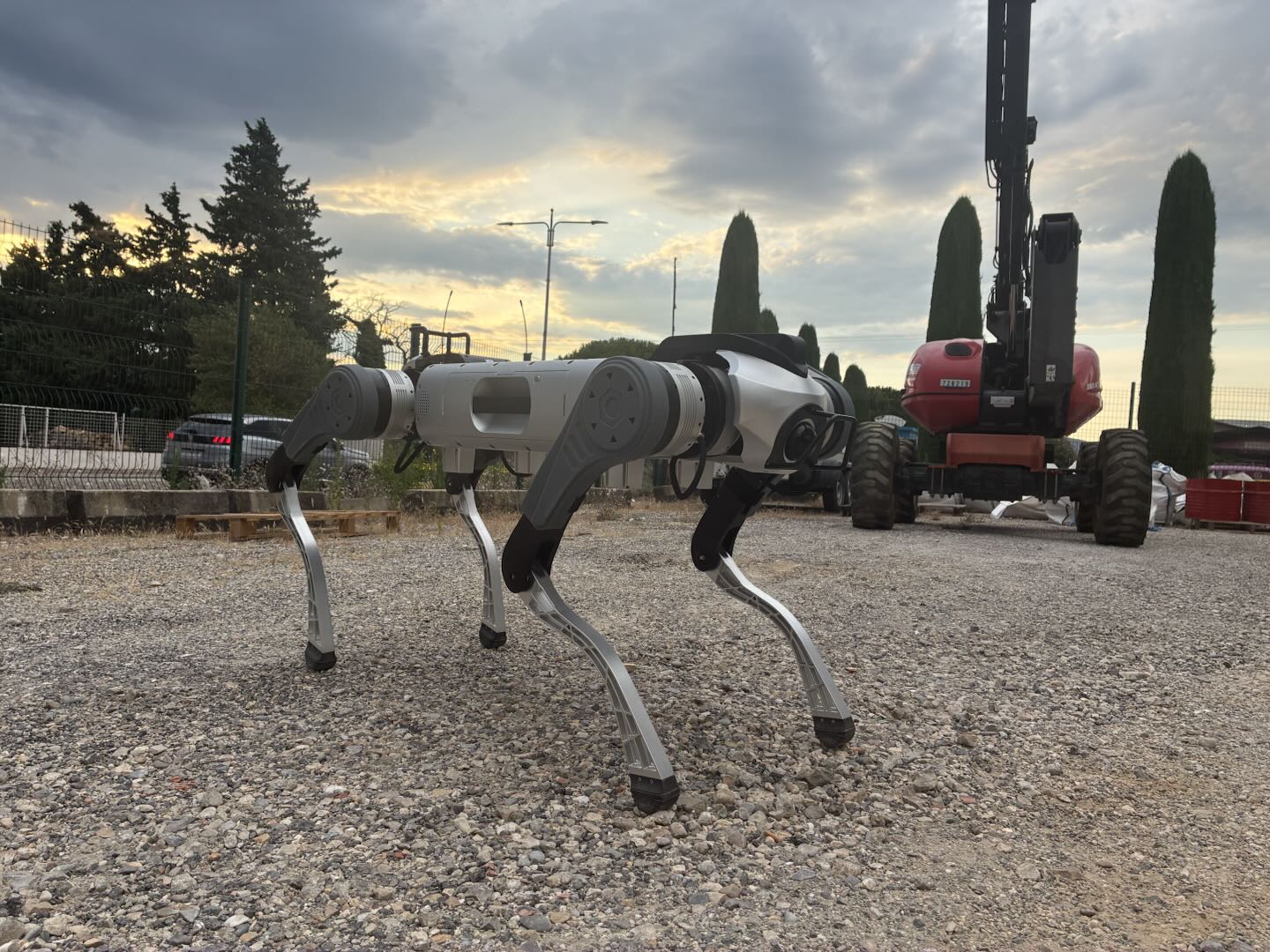
LINXAI Robotics develops advanced quadruped robotic platforms designed for industrial operations and complex outdoor environments. With a focus on heavy-duty and mid-size quadruped robots, the company combines proprietary technologies, advanced motion-control algorithms, and autonomous navigation capabilities to support demanding applications across industrial inspection, transportation, and field operations.